


Where Can I Schedule a Wheel Alignment Near Medford, NY?
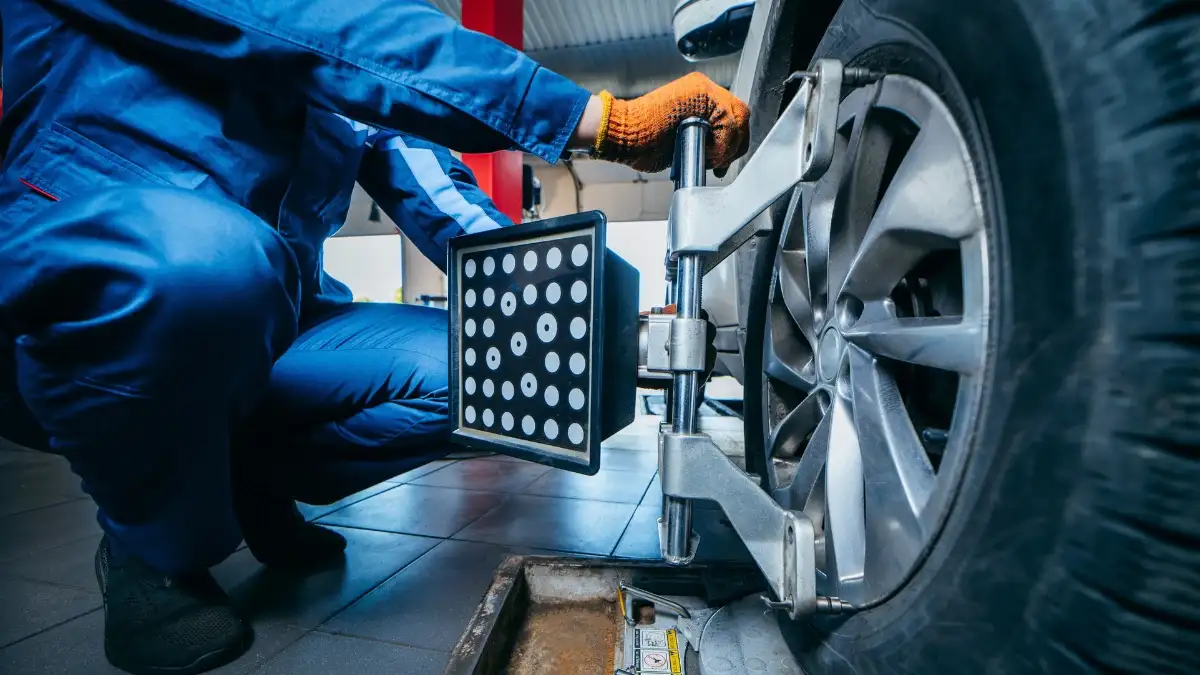
Where Can I Schedule a Wheel Alignment Near Medford, NY?
If you’re looking for a wheel alignment on your Honda, Medford drivers can count on the team at Apple Honda. Our service center is staffed by an expert team of Honda-certified technicians who can handle everything from routine wheel and tire care to complex repairs on your Honda brakes, suspension, or transmission. Our Honda service department is dedicated to offering Long Island residents excellent values on reliable auto maintenance and repairs.
Schedule a Wheel Alignment Near Me
How Often Should I Have My Honda’s Wheel Alignment Checked?
Most passenger vehicles should have their wheel alignment checked once a year or every 12,000 to 15,000 miles, as well as whenever you install a new set of tires or experience a hard impact with a road hazard. Following a regular inspection schedule prevents uneven tire wear, preserves directional handling, and protects your vehicle’s steering components.
Wheel alignment refers to the precise calibration of your vehicle’s suspension linkages, ensuring the tires meet the road surface at factory-specified angles. Over time, everyday driving conditions (such as navigating uneven pavement, entering steep driveways, or encountering road debris) can gradually force these delicate mechanical angles out of specification.
Checking your alignment on an annual basis is one of the most cost-effective ways to maximize tread life and protect your tire investment. If you suspect your steering is out of specification or notice abnormal tread wear, our Honda service team is equipped to measure and adjust your suspension angles back to original factory tolerances.
Which Alignment Angle Causes the Most Tire Wear and Can Bad Alignment Ruin Your Tires?
Incorrect toe alignment causes the fastest and most severe tire wear because an improper toe angle forces the tire tread to drag sideways across the pavement while rolling forward. Severe wheel misalignment can easily ruin a brand-new set of tires in just a few thousand miles by scrubbing off tread rubber and causing premature structural damage.
To understand how suspension alignment affects tire longevity, it helps to examine the three primary alignment angles that technicians measure and adjust:
- Toe Angle: Toe describes the inward or outward angle of the tires when viewed from directly above the vehicle. If the front of the tires points inward toward each other, it is known as toe-in; if they point outward, it is toe-out. Even a fraction of an inch of improper toe forces the rubber compound to scrape continuously against the road surface. This creates a distinct wear pattern known as feathering, where the tread blocks wear down smoothly on one side and feel sharp on the other.
- Camber Angle: Camber is the inward or outward tilt of the tire when viewed from the front of the vehicle. Excessive negative camber (top of the tire leaning inward) wears down the inner edge of the tread, while positive camber wears down the outer shoulder. While camber misalignment damages tires over time, it wears rubber down significantly slower than severe toe misalignment.
- Caster Angle: Caster measures the forward or backward angle of the steering axis when viewed from the side. While incorrect caster influences steering stability and directional tracking, it does not directly cause accelerated tire tread wear.
When these suspension settings stray from manufacturer specifications, the tire’s contact patch is distorted. Driving on misaligned wheels generates excessive friction and heat, rapidly stripping away functional tread depth and creating dangerous thin spots.
How Can I Tell If My Car Needs an Alignment After Hitting a Pothole?
You know your vehicle requires a wheel alignment after a pothole impact if your steering wheel remains off-center while driving straight, your vehicle continuously pulls toward the shoulder, or you feel sudden steering wheel vibration. A sudden, violent strike against a deep pothole or curb transfers heavy kinetic force directly into steering tie rods, control arms, and strut mounts, easily bending metal components or shifting adjusting bolts out of position.
Driver feedback is usually the earliest warning sign that suspension angles have shifted after an impact. Watch for these distinct driving symptoms:
- Crooked Steering Wheel: On a straight, level roadway, your steering wheel spoke should sit perfectly horizontal. If you must hold the wheel at an angle to maintain a straight path, your front or rear alignment has shifted.
- Vehicle Drift or Pulling: If your vehicle consistently wanders or pulls hard toward one side of the lane when you briefly relax your grip on the steering wheel, the alignment angles are fighting each other.
- Steering Wheel Vibration: While wheel imbalance usually causes speed-sensitive shaking, a harsh pothole impact can cause vibration by disrupting alignment angles or loosening steering linkages.
- Scuffing or Chirping Tires: Hearing your tires squeal or scrub during low-speed parking lot turns often indicates that the toe angle is severe enough to force the rubber to slide sideways across the pavement.
Commuters traveling through Medford along busy transit corridors like the Long Island Expressway frequently encounter deep potholes created by harsh winter freeze-thaw cycles. Our service advisors often see drivers who notice an immediate steering drift right after hitting a hidden roadway dip along these heavily traveled commuter routes. Having your alignment inspected promptly after a severe road impact prevents localized suspension stress from ruining your tire tread.
What Is the Difference Between 2-Wheel and 4-Wheel Alignments?
A 2-wheel alignment adjusts only the front steering angles, whereas a 4-wheel alignment measures and calibrates toe, camber, and caster angles across all four wheels. A 4-wheel alignment typically costs slightly more than a 2-wheel alignment because technicians must measure the vehicle’s geometric thrust line and adjust complex rear suspension linkages.
Understanding which alignment service your vehicle requires depends primarily on its drivetrain layout and rear suspension design:
| Feature / Capability | 2-Wheel Alignment | 4-Wheel Alignment |
|---|---|---|
| Wheels Adjusted | Front wheels only | Front and rear wheels |
| Thrust Angle Setup | References static rear axle | Calibrates dynamic rear toe/camber to match centerline |
| Typical Suspension Match | Solid/rigid rear axles | Independent rear suspension & AWD/4WD systems |
| Labor Complexity | Adjusts front tie rods and struts | Adjusts front tie rods plus rear eccentric toe/camber bolts |
| Tire Protection | Protects front steer tires | Protects all four tires from uneven tread wear |
Vehicles equipped with independent rear suspensions, including most modern crossover SUVs, sedans, and all-wheel-drive models, require a full 4-wheel alignment. During a 4-wheel service, modern laser alignment software measures the rear axle’s direction of travel (the thrust line) first, allowing the technician to align the front wheels perfectly parallel to the rear axle. If a vehicle with an independent rear suspension receives only a front-wheel adjustment, the rear wheels may still push the chassis sideways, causing driver steering compensation and severe rear tire wear.
Should I Get a Wheel Alignment and Tire Balance at the Same Time?
Yes, getting a wheel alignment and a tire balance performed during the same service visit is highly recommended because balancing eliminates high-speed rotating vibrations while alignment ensures the tires roll straight without dragging. Combining both maintenance routines maximizes overall ride comfort, fuel efficiency, and tread longevity.
Although drivers frequently group wheel alignment and tire balancing together, they solve entirely different mechanical issues:
- Tire Balancing Corrects Weight Distribution: Over time, natural tire wear or small weight shedding creates heavy spots around the wheel assembly. Technicians mount the wheel on a high-speed spin balancer and apply small clip-on or adhesive lead-free weights to balance the rotational weight. Imbalanced tires cause high-speed hopping or steering wheel wobbles.
- Wheel Alignment Corrects Suspension Angles: Alignment adjusts the mechanical linkages connecting your car to the wheels. It ensures that all four tires sit flat on the road surface and point straight ahead in complete geometric harmony.
Performing both services together, especially when purchasing a new set of tires or executing a regular tire rotation, guarantees that your tires roll smooth without vertical shaking or horizontal drag.
Do Modern Cars Need ADAS Recalibration After a Wheel Alignment?
Yes, modern vehicles equipped with Advanced Driver Assistance Systems (ADAS), such as Honda Sensing, frequently require electronic sensor recalibration following a wheel alignment adjustment. Systems like lane keeping assist, adaptive cruise control, and automatic emergency braking rely on forward-facing cameras and radar units aligned precisely with the vehicle’s mechanical thrust line.
When a technician performs a physical wheel alignment, altering the toe or camber angles subtly changes the geometric direction in which the vehicle travels. If suspension angles are modified without recalibrating the underlying ADAS safety sensors:
- Misaligned Optical Tracking: The windshield-mounted camera may perceive the center of the driving lane incorrectly, causing lane keep assist to gently pull the vehicle toward lane markings.
- Off-Target Radar Aiming: Millimeter-wave radar units mounted behind the front grille may aim slightly above, below, or to the side of preceding traffic, affecting adaptive cruise control distance monitoring.
- Diagnostic System Faults: Modern vehicle control modules monitor steering angle sensors against camera inputs. A disagreement between physical steering angle and electronic camera data can trigger dashboard warning lights and temporarily disable driver-assist safety features.
Factory-certified service facilities utilize specialized optical target boards and diagnostic software to perform static and dynamic ADAS recalibrations immediately after suspension adjustments are completed.
Where Can I Find Professional Wheel Alignment Service Near Medford, NY?
Drivers seeking professional wheel alignment near Medford can depend on the factory-trained technicians at Apple Honda, conveniently located right on Route 58 in Riverhead, New York. Our state-of-the-art service facility utilizes high-definition laser measurement racks to verify every suspension angle against strict factory tolerances.
Whether you’re making a daily commute along I-495 or taking weekend trips through local nature preserves, keeping your steering linkages aligned protects your vehicle’s safety and operational efficiency. Choosing factory-certified service provides several clear advantages:
- Model-Specific Laser Specifications: Computerized diagnostic alignment equipment pre-loaded with exact OEM chassis specifications for your specific year and model.
- Factory-Trained Technicians: Certified mechanics who understand complex multi-link rear suspensions, electronic power steering setups, and specialized factory adjustment procedures.
- OEM Replacement Components: Access to genuine factory bushings, tie rods, and suspension hardware when worn parts prevent exact alignment setting.
- Integrated Safety Recalibration: Capability to perform complete ADAS camera and radar sensor recalibrations in-house following alignment adjustments.
Find Honda Specials on Wheel Alignment
Wheel Alignment FAQs and Common Questions About Tire Care
How long does a standard wheel alignment service take?
A standard wheel alignment inspection and adjustment typically takes between 45 to 60 minutes to perform using modern computerized equipment. If your vehicle features advanced driver-assist safety sensors that require dynamic or static electronic recalibration after suspension angles are adjusted, the complete service procedure generally takes between 90 minutes and two hours.
Can bad wheel alignment reduce fuel economy?
Yes, improper wheel alignment directly degrades fuel economy by increasing tire rolling resistance. When wheel angles are out of specification, the tires scrub sideways against the pavement instead of rolling smoothly forward. This mechanical drag forces your engine or electric drive motor to work harder and burn more fuel to maintain steady highway speeds.
Will buying new tires fix a vehicle pulling to one side?
Installing new tires will not resolve a directional vehicle pull if the underlying cause is misaligned suspension geometry. While fresh tread compound can temporarily mask minor handling quirks, misaligned wheels will quickly begin scrubbing down the tread compound on your new tires in the exact same uneven pattern as the old set.
What happens if you delay getting a needed wheel alignment?
Deferring a needed wheel alignment leads to accelerated tread wear, reduced fuel efficiency, and premature strain on steering tie rods and ball joints. Over time, severe tread destruction will require replacing expensive tires thousands of miles early and can compromise emergency braking traction on rainy or icy road surfaces.
Is a wheel alignment covered under standard vehicle warranty maintenance?
Routine wheel alignments are generally classified as standard wear-and-tear maintenance rather than warranty-covered repairs, as road hazards, pothole impacts, and curb strikes naturally alter suspension angles during normal operation. However, suspension adjustments required due to a factory-warranted steering component replacement are typically included within that specific repair coverage.
Who offers Honda service specials near Medford, NY?
The team at Apple Honda offers a number of competitive service deals, including coupons on parts, labor, and accessories, as well as maintenance bundles. We update our Honda service offers frequently, in order to provide Long Island drivers with the widest possible selection of deals on important vehicle maintenance. At Apple Honda, financing your next service appointment should be affordable and accessible, so you can focus on getting back on the road.
Contact Our Honda Service Center in Medford
Protect Your Tires with Certified Service at Apple Honda
Keeping your vehicle’s wheel alignment properly adjusted is an essential part of regular maintenance that saves you money by extending tire life, protecting fuel efficiency, and ensuring predictable emergency handling. Whether you recently encountered a harsh pothole or noticed your steering wheel sitting slightly off-center during your morning commute, having your suspension measured on modern laser equipment provides complete peace of mind.
Our factory-certified service center is fully equipped with specialized diagnostic tools, modern alignment racks, and trained technicians dedicated to maintaining your vehicle’s original road manners. We invite you to protect your automotive investment today by scheduling your next alignment check or tire maintenance visit with our experienced team.