


Honda CR-V vs. Toyota RAV4
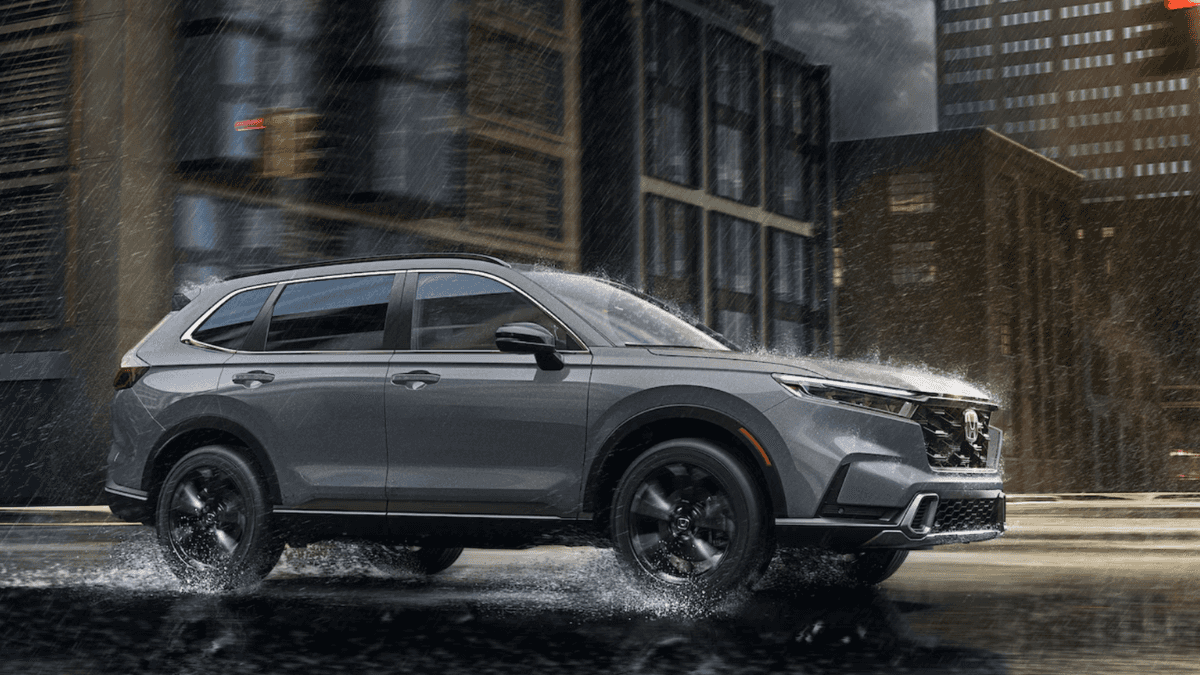
Why the 2026 Honda CR-V Stands Out in the Compact SUV Market
The 2026 Honda CR-V distinguishes itself as a top choice in the competitive compact SUV segment through a balance of power, efficiency, and value. While the Toyota RAV4 Hybrid packs a robust 226 net combined horsepower, the CR-V’s various trims offer a versatile lineup, including a 190-hp 1.5L turbocharged engine in the LX and EX trims, as well as a more refined 204-hp hybrid powertrain in its Sport Hybrid variants.
Though the RAV4 impresses with up to 43 combined MPG in its hybrid variants, the CR-V’s non-hybrid trims provide solid efficiency with 30 combined MPG and excellent drivability, appealing to drivers seeking reliability without compromise.
Honda’s focus on ergonomic interior design, combined with advanced standard tech such as a 9-inch touchscreen with wireless Apple CarPlay and Android Auto, ensures a modern driving experience. For residents in Riverhead seeking an SUV that merges thoughtful design and day-to-day functionality, the 2026 Honda CR-V shines as a practical and intelligent choice.
A Closer Look at the CR-V and RAV4
Honda CR-V Powertrain Overview
The 2026 Honda CR-V offers a practical powertrain package tailored for everyday driving, emphasizing efficiency and reliability:
- The base LX trim employs a 1.5-liter turbocharged 4-cylinder engine with 190 horsepower at 6,000 rpm and 179 lb-ft of torque from 1,700 to 5,000 rpm.
- Paired with a Continuously Variable Transmission (CVT), this engine optimizes fuel efficiency while maintaining smooth acceleration.
- The CR-V’s drivetrain options include both front-wheel drive (FWD) and all-wheel drive (AWD), with the AWD variant slightly lowering fuel economy to 29 mpg combined compared to 30 mpg for FWD models.
Toyota RAV4 Powertrain Overview
The base RAV4 Hybrid LE FWD features a 2.5-liter 4-cylinder hybrid powertrain that produces a robust net combined 226 horsepower, paired with an electronically controlled Continuously Variable Transmission (eCVT). This hybrid system also provides 163 lb-ft of torque from the gasoline engine alone, while the electric motors contribute additional torque for improved responsiveness.
Like the CR-V, the RAV4 comes with FWD and an available Electronic On-Demand AWD system. The combined fuel economy stands out at 43 mpg for FWD trims, a notable advantage over the CR-V’s maximum of 30 mpg in base trims.
When examining performance nuances, the CR-V’s lighter curb weight—3,472 pounds for the LX FWD versus 3,594 pounds for the RAV4 Hybrid LE FWD—translates into agile handling and a more nimble driving feel, attributes often prized in urban and suburban driving environments. The CR-V’s powered continuously variable transmission also contributes to fluid power delivery, ensuring smooth acceleration and a refined driving experience.
Towing Capacity Comparison
For drivers valuing towing, the CR-V supports a trailer capacity of 1,500 pounds, demonstrating its capability for light hauling tasks. Meanwhile, the RAV4 offers a higher maximum towing capacity of 3,500 pounds, but this figure is tied primarily to its AWD trims and higher-end variants rather than the base model.
Despite the RAV4’s hybrid powertrain delivering more horsepower and superior EPA fuel economy, the CR-V distinguishes itself with its turbocharged engine that balances spirited performance with everyday comfort. Honda’s multiple drivetrain choices and driver-focused transmission tuning provide greater versatility for diverse driving styles, while still maintaining impressive fuel efficiency for a non-hybrid.
Exterior Design and Practical Style: Honda CR-V Versus Toyota RAV4
Dimensions & Capacity
- Honda CR-V: 184.8 inches in length and spans 73.5 inches in width
- Toyota RAV4: 181.1 inches long and 73.0 inches wide
2026 CR-V Design Overview
The 2026 Honda CR-V presents a sophisticated, well-proportioned exterior, which translates into a more commanding presence on the road without sacrificing maneuverability. The CR-V’s height varies between 66.2 inches for front-wheel-drive models and 66.5 inches for all-wheel-drive trims, offering a balanced stance that complements its aerodynamic shape.
Honda’s design approach emphasizes practicality and subtle elegance, with the CR-V offering LED headlights with automatic on/off functionality, alongside LED daytime running and taillights, projecting a modern, daylight-visible glow that enhances visibility.
Functionally, the vehicle includes a power tailgate with programmable height, available hands-free access, and a flexible rear cargo setup that can adjust between 34.7 and 39.3 cubic feet behind the second row.
2026 RAV4 Design Overview
The RAV4, meanwhile, provides 37.8 cubic feet of rear cargo space, slightly less than the CR-V’s offering, paired with a rear cargo volume maxing out at 70.4 cubic feet compared to the CR-V’s 71.8 to 76.5 cubic feet range depending on configuration.
The RAV4 adopts a bolder, more rugged aesthetic with its 17- to 20-inch wheels and distinctive “hammerhead” front end, appealing to those favoring a sporty, aggressive look. In contrast, the CR-V strikes a cleaner and contemporary visual tone with available 17- to 19-inch wheels and gloss black roof rails, offering both style and function. Honda’s exclusive TrailSport trim elevates rugged styling further with all-terrain tires and unique exterior accents, providing a taste of adventure for those desiring off-road capability without overstatement.
Both crossovers deliver useful exterior amenities, but the CR-V’s combination of thoughtful design, slightly larger dimensions, and flexible cargo solutions position it as the more adaptable daily driver. The power tailgate is programmable for user convenience, and LED lighting throughout ensures efficient illumination. Meanwhile, the RAV4’s advantage in overall vehicle height and unique design may appeal cosmetically but does not translate into increased utility.
Passenger Comfort and Interior Versatility: How the CR-V Excels
The 2026 Honda CR-V distinguishes itself appreciably in passenger comfort and cabin flexibility, two areas critical for compact SUV buyers prioritizing day-to-day usability. The CR-V’s interior boasts a notably generous footprint, extending class-leading rear-seat legroom that comfortably accommodates adults in the back, underscoring its family-friendly design.
With seating for five and thoughtful ergonomic touches, the CR-V offers a more accommodating environment for passengers compared to the 2026 Toyota RAV4, which also seats five but provides slightly less interior room due to its shorter overall length of 181.1 inches versus the CR-V’s 184.8 inches.
Inside, the CR-V’s cabin emphasizes user-friendly design, maintaining physical controls for climate and audio rather than relying entirely on touchscreen inputs, enhancing driver focus and convenience. The EX trim introduces comfort features such as heated front seats, dual-zone automatic climate control, and a one-touch power moonroof, elevating the driving experience. The EX-L and hybrid trims further enhance comfort with leather-trimmed seats and a larger, fully digital 10.2-inch instrument cluster, plus innovations like power tailgate operation that adds convenience for loading and unloading.
In terms of material quality and cabin details, the CR-V’s interior finishes, including premium cloth, leather options, and high-grade plastics, create an inviting atmosphere, complete with durability and refinement.
Rear-seat amenities such as USB-C charging ports and climate vents improve passenger comfort for longer journeys, showcasing attention to the needs of rear passengers. While the RAV4 also offers heated seats and dual-zone climate control, the CR-V’s slightly larger dimensions translate to a more spacious cabin feel, giving it the edge in occupant comfort and modular interior arrangements.
Advanced Technology and Connectivity Features in the 2026 CR-V
The 2026 CR-V showcases a technology suite designed to enhance convenience, connectivity, and entertainment across its trims. Standard equipment in all CR-V models includes a substantial 9.0-inch high-definition touchscreen that replaces the smaller 7-inch unit found in previous years, promoting an intuitive and immersive user experience.
This screen supports wireless Apple CarPlay and Android Auto, allowing seamless smartphone integration without the clutter of cables. Additionally, a Qi-compatible wireless charging pad comes standard, a feature not universally available on competitors like the Toyota RAV4.
In terms of digital displays, the CR-V offers a 7-inch TFT meter display on base trims, with upgrades to a fully digital 10.2-inch instrument cluster on higher trims such as the EX-L and Sport-L Hybrid. This progression offers more customization and a modernized interface for drivers seeking richer vehicle information at a glance.
Audio System Comparison
Audio options are also notably competitive. The CR-V ranges from a 160-watt, 4-speaker system on entry-level models to an available 12-speaker Bose premium sound system in the Sport Touring Hybrid trim. This premium stereo incorporates a subwoofer and delivers immersive sound quality that surpasses the standard 6-speaker system in the base RAV4 trims and competes strongly against Toyota’s 9-speaker JBL premium system.
Connectivity and Infotainment
Connectivity highlights extend beyond the infotainment screen. The CR-V supports HondaLink connected services and offers over-the-air (OTA) updates, ensuring owners receive timely software improvements without dealer visits. Google built-in functionality, including Google Assistant, Google Maps, and Google Play integration, is exclusive to the CR-V’s top-tier Sport Touring Hybrid, providing a seamless, smartphone-independent experience.
Compared to Toyota’s 10.5- to 12.9-inch touchscreen options, the CR-V’s screen size is competitive, though Toyota’s larger displays may impress tech enthusiasts. However, Honda maintains an advantage with more extensive wireless connectivity across trims and a simpler interface with physical controls that many drivers find easier to operate without distraction.
Safety Innovations: Comparing Honda Sensing to Toyota Safety Sense 4.0
The 2026 Honda CR-V and the 2026 Toyota RAV4 both prioritize driver and passenger safety with comprehensive suites of advanced safety technologies, yet the CR-V offers a notably broader array of features as standard across its trims, reinforcing its position as a top safety contender in the compact SUV segment.
Starting with the 2026 Honda CR-V, every model comes equipped with the full Honda Sensing suite, including:
- Collision Mitigation Braking System (CMBS)
- Road Departure Mitigation System (RDM)
- Adaptive Cruise Control (ACC) with Low-Speed Follow
- Lane Keeping Assist System (LKAS)
- Forward Collision Warning (FCW)
- Lane Departure Warning (LDW)
- Blind Spot Information System (BSI) with Cross Traffic Monitor
- Low-speed braking control
Additionally, the CR-V offers front and rear parking sensors and a Rear Seat Reminder, further supporting driver awareness beyond the road.
In contrast, the 2026 Toyota RAV4 comes standard with Toyota Safety Sense 4.0 (TSS 4.0), which includes:
- Pre-Collision System with Pedestrian Detection
- Lane Tracing Assist
- Lane Departure Alert with Steering Assist
- Full-Speed Range Dynamic Radar Cruise Control
- Drive Recorder and Front Cross-Traffic Alert
- Available panoramic 360-degree camera systems in higher trims
- Safety Connect emergency services
However, parking assistance, including front and rear parking alerts with automatic braking, is only available in an optional XSE Technology Package, unlike the CR-V’s standard equipment on select trims like the EX-L.
An important distinction lies in the availability of Blind Spot Information System, which is standard on the CR-V EX and above, whereas Toyota’s Blind Spot Monitor with Rear Cross-Traffic Alert is part of the higher trims and packages.
Furthermore, Honda’s system includes knee airbags for both front driver and passenger and outboard rear side airbags as standard, providing an extra layer of occupant protection that Toyota does not explicitly list in its standard equipment.
Upgrade Your Drives with the 2026 CR-V Near Manorville
Trusting our Honda Wading River area dealership means counting on confidence, value, and expertise. Estimate monthly car payments with our payment calculator online, and don’t forget to schedule a test drive. If you have any questions before financing or Honda leasing, just contact us online!
Frequently Asked Questions About Choosing the 2026 Honda CR-V Over the RAV4
How do the powertrains and fuel efficiency compare between the CR-V and RAV4?
The CR-V LX features a 1.5L turbocharged 4-cylinder engine producing 190 hp and 179 lb-ft of torque, paired with a CVT. It achieves a combined EPA rating of 30 mpg (28 city / 33 highway). Meanwhile, the RAV4 Hybrid LE uses a 2.5L hybrid powertrain generating 226 net combined hp, reaching 43 mpg combined (47 city / 40 highway). Although the Toyota offers higher horsepower and superior fuel economy thanks to its hybrid system, the CR-V’s turbocharged engine provides smooth, responsive driving in a lighter vehicle, and its conventional fuel system uses regular unleaded gas without complicating hybrid technology.
Which vehicle offers better cargo and passenger space?
In terms of interior volume, the Honda CR-V provides up to 39.3 cubic feet of cargo space behind the second row, slightly edging the Toyota RAV4’s 37.8 cubic feet. The CR-V is also noted for class-leading rear-seat legroom, delivering more comfort to passengers during longer drives. Seating for five is standard in both SUVs, but Honda’s flexible cargo floor options and generous rear passenger dimensions enhance everyday usability for families or those needing versatile storage.
What are the differences in towing capacity?
The CR-V is rated for towing up to 1,500 pounds, adequate for light-duty trailers or recreational gear. The Toyota RAV4 elevates towing capability to 3,500 pounds in some trims, reflecting its focus on capability. However, many CR-V buyers prioritize efficiency and daily practicality over heavy towing, making the CR-V’s balance more suited to typical suburban and commuting needs.
How do the warranty and roadside assistance packages compare?
Honda provides a 3-year/36,000-mile basic warranty, a 5-year/60,000-mile powertrain warranty, and 3 years/36,000 miles of roadside assistance, ensuring comprehensive coverage and support for owners. In contrast, Toyota offers a similar basic and powertrain warranty but only 2 years of roadside assistance, making Honda’s program more generous for peace of mind.